
 |
|---|
| Source |
 |
|---|
| Source |

#Newsletter
[@markCostInterruptedWork2008]
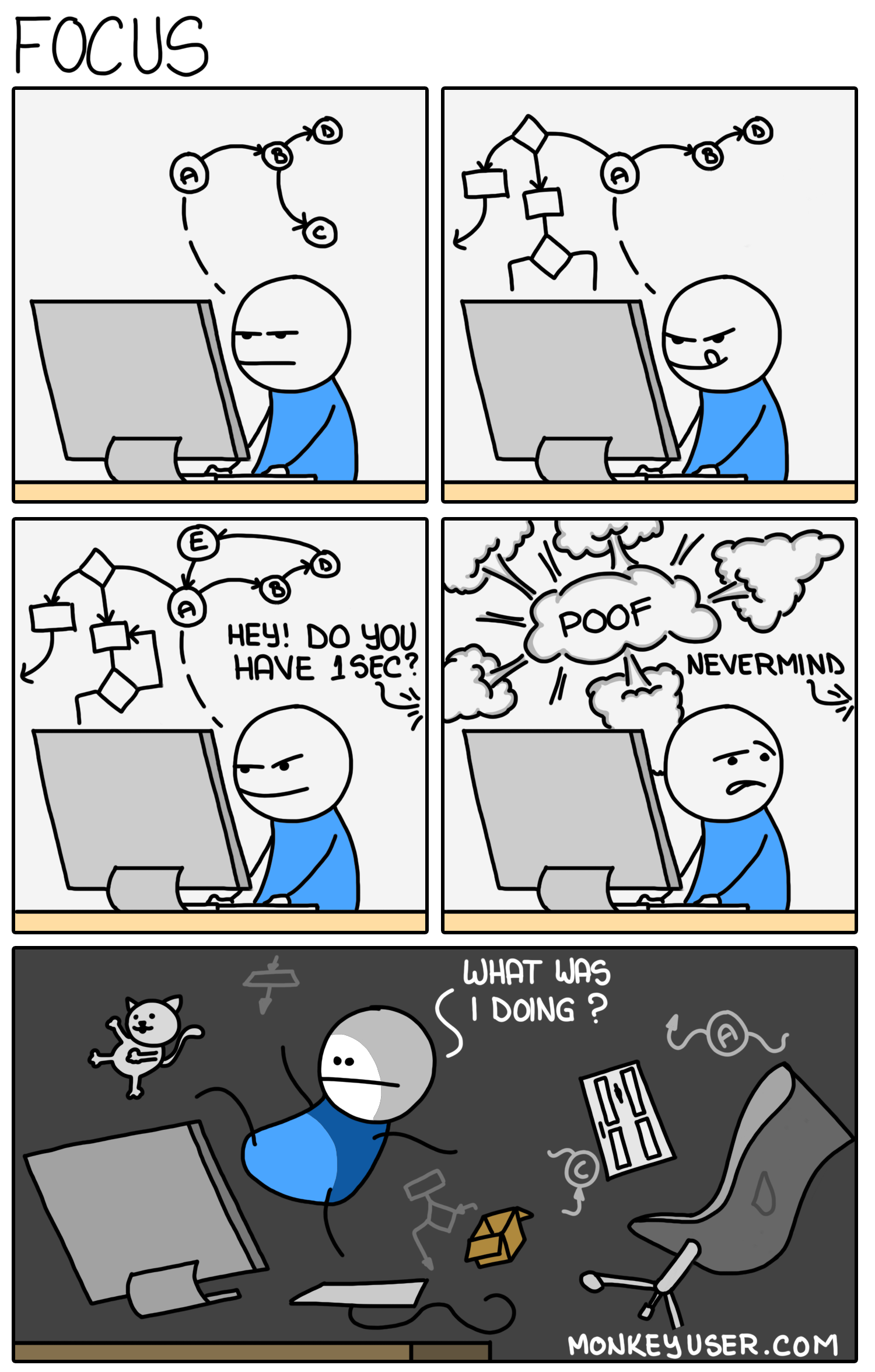
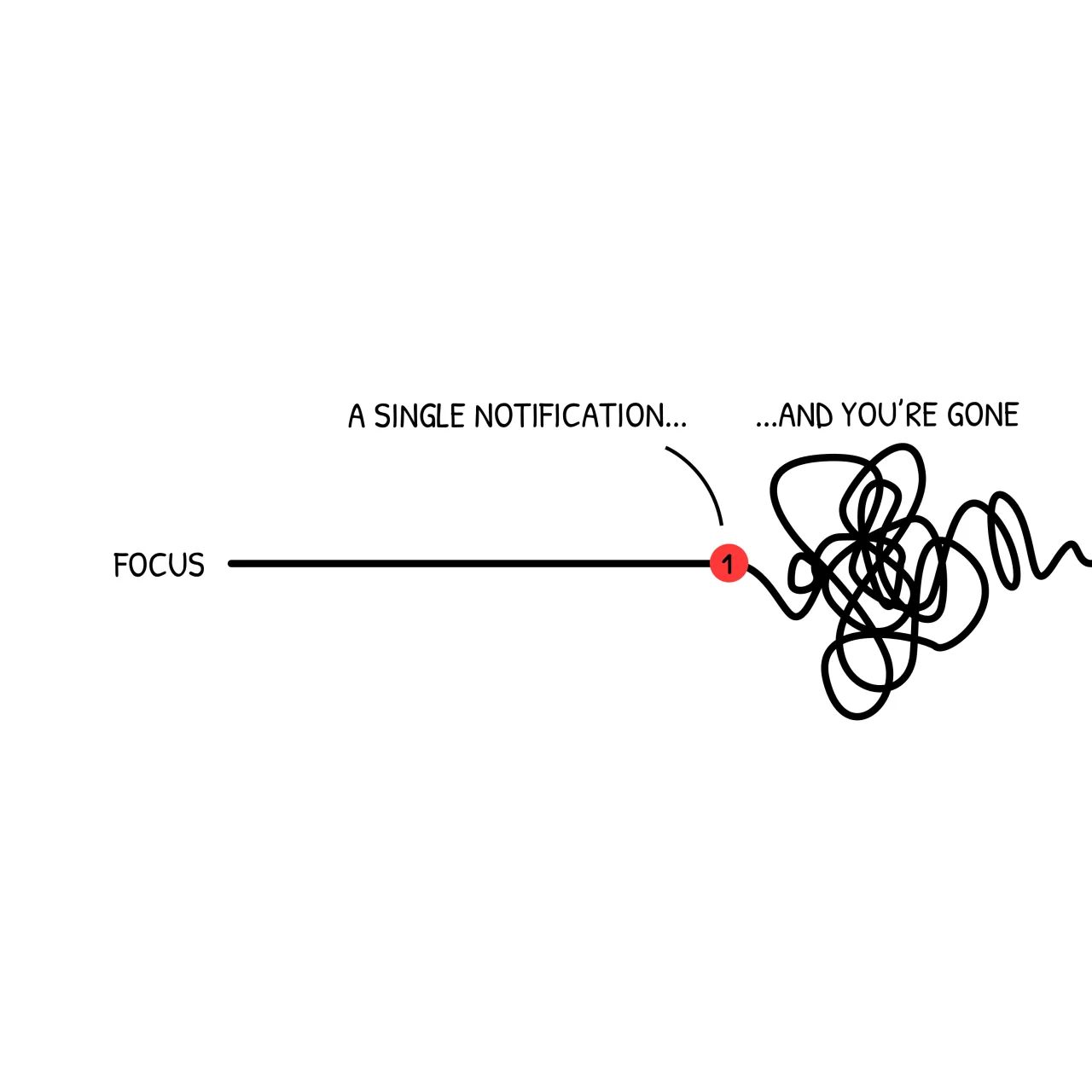
It takes the brain an average of 23 minutes and 15 seconds to refocus after a distraction / an interruption, a phenomenon known as the “cognitive switching penalty”.
This happens because when interrupted, the brain must re-establish context for the original task, which is a process that can take a significant amount of time.
Carlson’s law
= Law of Homogeneous Sequences
by Sune Carlson
Interrupted work will always be less effective and take longer than if completed continuously.
Constant interruptions for software developers are caused by:
- Meeting overload: When a single daily standup runs 45 minutes, 10% of your team’s workweek is gone — before factoring in all the other recurring meetings filling their calendars.
- Calendar fragmentation: A developer with just 90 minutes of scattered meetings throughout the day can lose 4+ hours of potential deep work due to the mental context-switching required before and after each interruption.
- Ad-hoc communications: Junior developers naturally reach out with a “quick” Slack message when they’re stuck, and suddenly your most experienced engineers are spending more time troubleshooting others’ problems than solving their own.
See also:
- Blog posts
- Scientific papers
- [@vansolingenInterruptsJustMinute1998]
- [@czerwinskiDiaryStudyTask2004]
- [@markNoTaskLeft2005]
Parable of the Two Watchmakers